Scoliosis Care in Mueller
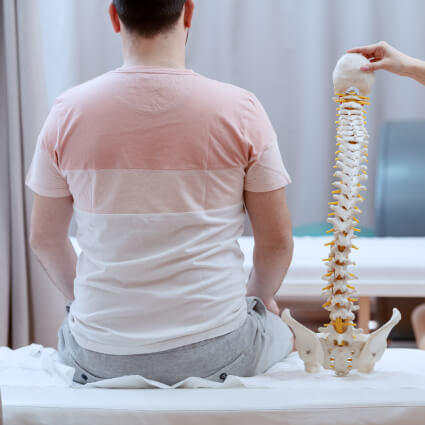 A slight curve in the spine can go unnoticed for years, until one shoulder sits higher than the other, or clothes suddenly hang differently on one side. Scoliosis shows up differently for everyone, but the effect is often the same: a body that feels slightly out of balance. There is a lot that can be done to help you feel steadier and more comfortable.
When a Sideways Curve Takes Hold
Scoliosis is a sideways curve of the spine, ranging from barely noticeable to significant enough to affect posture and movement. It is most often found in adolescence, while the body is still growing, but it may also develop or worsen later in life as the discs and joints naturally wear down.
The Different Ways This Condition Can Develop
This is not one single condition. It shows up in a few different forms:
- Idiopathic, the most common type, often appears during growth spurts with no clear cause
- Degenerative, developing later in life as spinal discs and joints wear down
- Congenital, present from birth, due to how the spine formed
- Neuromuscular, linked to conditions affecting muscle control of the back
Signs Your Body May Be Off-Balance
It often shows up first as a visual change rather than pain: one shoulder blade sitting higher than the other, uneven hips, or clothing that fits differently from side to side. As the curve progresses, back pain, fatigue, and stiffness can follow.
When A Curve Deserves Closer Attention
Not every curve needs treatment, but any curve that appears to be progressing, or comes with ongoing pain or stiffness, is worth having evaluated. Catching changes early gives you more options for managing the curve.
How Dr. Fisher and Dr. Weikel Approach Care
Care focuses on reducing discomfort, improving joint mobility, and building better muscular balance around the spine. Chiropractic adjustments help restore alignment and motion in the spine’s joints, while soft-tissue therapies ease tension in muscles that are working overtime to compensate. Corrective exercises strengthen the muscles that keep the back steady, and simple posture habits carry those gains into daily life. Chiropractic care will not straighten the curve on its own, but it can play a real role in easing pain and helping the body function better.
What Progress Typically Looks Like
Most patients notice better mobility and less day-to-day discomfort as care continues. For growing patients, regular monitoring also helps track whether the curve is stable or changing, so care can be adjusted as needed.
Frequently Asked Questions
Can scoliosis be fixed with chiropractic care?
At what age is it usually found?
Ready for a Clearer Picture?
Whether your scoliosis was just diagnosed or you have been living with it for years, getting a clear picture of your spine is the best place to start. Contact Whole Family Chiropractors to schedule a consultation and talk through what a plan built around your needs could look like.
